Wednesday, 4 December 2013

On Being Obsessed and Chocolate


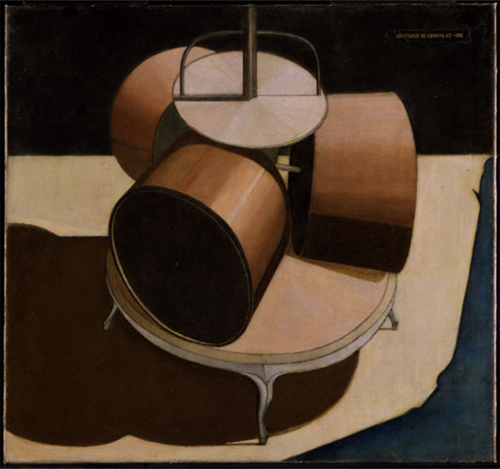
I was amused and pleased to see my novel listed on http://www.fishpond.com.hk (Hong Kong) among 'Chocolate Obsession Books'. This is totally correct, as the book concerns two obsessive men who go on a road trip to buy a very expensive chocolate grinder, very much like the one pictured above (or this one).

[Image: Marcel Duchamp's Chocolate Grinder (No.1) at the Philadelphia Museum of Art.]

Sunday, 24 November 2013

On Not Being Able to See Your Favorite Piece of Art


I hardly know anything at all about one of my favourite works of art. I can hardly even remember it at all. I saw a painting somewhere important about thirty years ago. I remember that it was a large painting by an emerging contemporary artist. I remember that it used lava colors: bright reds, oranges, and yellows. I remember that it was painted in a surrealist style. I think it was about a male body, but somehow about birth, too. It was rich and luscious and thought-provoking. I have looked for that painting ever since, but I have never found a hint of it. Today I have no idea who painted it or where I saw it or even what it is actually about.

But the interesting thing is that I still think about that mere notion of a painting with such fondness and admiration! I still completely love it!


The image shows a picture of Andy Warhol's (1985) 'Invisible Scultpture', which actually consisted only of a label that said: “Andy Warhol, USA/Invisible Sculpture/Mixed Media 1985. Copyright (2013) by Chris F. Westbury; May not be reproduced without permission of the artist.

Sunday, 10 November 2013

On a Sense of Balance

I am a longtime fan of Canadian singer/songwriter  Jane Siberry. I saw her in concert a few days ago and she sang this song 'Calling All Angels' as an encore. It is my favorite song of hers.  

She has released all her songs on a 'pay as you think best' basis. I like this item among her items for sale: "Lump sum according to your sense of balance.  This is how I like to do things, personally."

Saturday, 9 November 2013

On Mobius Dick

A few years ago my favorite blog BoingBoing had a competition to 'mash up' two authors. There was a prize; I forget what. I submitted a mash-up between Thomas Pynchon and Herman Melville. It didn't place and so perhaps failed to achieve what it set out to do, but here is my entry for your amusement.

 [Image is from this article on the space whale meme. I love the Internet.]
---------------------------------------- 
Mobius Dick, by Thomas Pynchon & Herman Melville

Our imaginations set aflame by yelling, our shouted slogans, our inflated sense of team spirit, we all sensed the gigantic apparition at once. But though each of us saw the same thing with wide-open eyes, none of us knew if the thing was in the real world, or whether it had been ripped out of us and made to appear real by the strange times, the extenuating circumstances, the insanity of the moment materializing for us as bleeding heaving flesh, our pure goal. Anyway something every one of us, freaks and ex-cons and escapees, all of us lost devils, could believe in. Something we could bet our lives on.

When it came Captain A-Man climbed and climbed and climbed. He didn’t stop climbing but continued beyond the upper edges of our limping vessel’s ragged rigging, climbing, as we swarmed in awed confusion below, to an impossible perch. The A-man could gaze at the water and see all its mysterious beasts and he could see inside them, could enter into each one. He fell into the dark water to enter all the beings living in that vast heaving chaos. He was billions of vectors of thought accelerating out through earth’s oceans looking for life that inflected in a whisker’s breadth so that at once he was pushing himself, his multi-vectored self, like a reverse big bang, from all directions with fantastic speed into just one little speck, a tiny speck in the midst of vast oceans, one beating heart among the billions. Inside that great heart the brave man burst like a firework, sparkling out into every cell, and then into every cell’s chromosomes and every chromosome’s nucleotides and each nucleotide’s atoms, until at last, lost in salt watery wash beyond the reach of normal vision, there was no more climbing to look outward, there were no more vectors in flight. He had become what he had wanted to become, what we men had all fought and bled and died for him to become, had done at last what he had needed to do, what you and I need him to keep doing; conflicting desires, conflicting lives, conflicting needs and ambitions and dreams, resolved by the simple application of a meta operator. At last at long last, he was (at peace and whole! So marvelous!) the hunter and the hunted at once.
Monday, 4 November 2013

On the Cover of 'The Bride Stripped Bare By Her Bachelors, Even'

This is the cover to my novel, coming out in June from CounterPoint Press. My first blog post here explains the title. Along with the piece named in the title, the cover alludes to several of Marcel Duchamp's other pieces, including The Green Box (from which my chapter titles were drawn), the Boîte-en-valise, and Self-Portrait in Profile.

Saturday, 2 November 2013

On 36 Plots from the Futility Closet

The always-excellent Futility Closet has an interesting article today on French writer Georges Polti's (1916) claim that all stories are variations on just 36 basic plots (although Cecil Adams claims that Polti stole the idea from Italian playwright Carlo Gozzi). It's an interesting and thought-provoking list, but I find that many of the categories are vague enough to cover each other at different levels of abstraction.

My novel The Bride Stripped Bare By Her Bachelors, Even tells a story about a hero and his faithful sidekick who go on a heroic quest with a powerful third friend, to obtain an object that is necessary for the hero to obtain liberation. (More briefly: it's a buddy road trip story.) Depending on the level of abstraction at which you view the story, I think it could be described by any one (or some combination) of six of Polti's plots:
9. Daring enterprise. The Bold Leader takes the Object from the Adversary by overpowering the Adversary.
10. Abduction. The Abductor takes the Abducted from the Guardian.
11. The enigma. The Interrogator poses a Problem to the Seeker and gives a Seeker better ability to reach the Seeker’s goals.
26. Crimes of love. A Lover and the Beloved enter a conflict.
30. Ambition. The Ambitious Person seeks the Thing Coveted and is opposed by the Adversary.
35. Recovery of a lost one. The Seeker finds the One Found.
If I have to pick just one to describe my story, I choose number 11, The Enigma: The Interrogator poses a Problem to the Seeker and gives a Seeker better ability to reach the Seeker’s goals.

[Image: Altered detail from Caravaggio's Sacrifice of Isaac, now at the Uffizi Gallery in Florence]

Thursday, 31 October 2013

On the Defense of Blue Stuff

Reading about Yellowism made me think of Yves Klein's International Klein Blue (though International Klein Blue has more to do with blue than Yellowism has to do with yellow). This video homage to Yves Klein Blue by Jason Judd made me laugh. Nice work.

On the Defense of Yellow Stuff

Until I read this passionate defense of Yellowism by Calum Rodger, I did not know anything about the Yellowist movement.

[Image: Paul Cézanne's 'The Card Players', a version of the most valuable painting on earth today, valued at between US$250,000,000 and US$300,000,000.]

Sunday, 27 October 2013

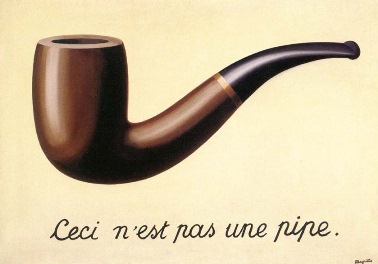
On the Treachery of Images

J.S.G. Boggs is a contemporary artist who has carved out an interesting niche for himself. He specializes in making drawings that look (very much) like real money, and exchanging them at face value in commercial transactions. For example, he has used a drawing of a US$1000 bill to buy a three dollar hamburger, receiving US$997 in real money (insofar as American money still is real, in these days of imminent US bankruptcy) as change. The extra-interesting twist is that Boggs' work is usually worth far more to his collectors than the face-value of its denomination. A Boggs bill with a $10 'face value' might sell for more than a thousand ('real') dollars on the open market. Although he has had a little trouble with counterfeiting charges, he has generally avoided them since he never pretends that his drawings are real money, only draws one side, and usually includes obvious changes from the real bill into his drawings. He has made his living from this art form for many decades. You can read more about Boggs here, at the on-line Duchampian journal, Tout-fait.

[Image: René Magritte's La trahison des images]

Sunday, 20 October 2013

On Remaking Duchamp's Readymade

I like this re-make of Duchamp's Fountain,  entitled Nouveau Rendez-vous (New Meeting) by contemporary French artist Jerome Pierre, who has a lot of Duchampian-inspired pieces on his website.

Friday, 18 October 2013

On The Rape of the Sabines


This painting, The Rape Of The Sabines, by Nicolas Poussin (1594–1665) has always seemed powerful to me. In part this is because I had a friend named Sabine when I first paid attention to it, and I knew no other meaning of the word than that it was a woman’s first name. I wondered if all the women allegedly being raped could possibly be named Sabine. Youth is difficult.


In fact (and now I speak with the full authority of Wikipedia) the Sabines were a tribe from whom the Romans abducted wives in 750 BCE, as attested to by, e.g. both Livy and Plutarch. The women in the painting weren’t actually being raped in the modern sense of the word, but in the old sense of the word, when rape (from the Latin root raptio meaning a large-scale abduction of women, as any careful reader of Wikipedia already knows) meant...well, yeah, a large-scale abduction of women. Like Wikipedia said.


Despite my confusion about the victims and my early visual confirmation of the lack of any partially naked women in the painting (and by no means implying either that rape and sex have anything more to do with each other than that a woman must be partially naked or that violent mass abduction is in itself just an enjoyable spectator sport), this is an exciting and great painting. You’ll know why if you go to the Louvre: this sucker is 1.6 metres by 2 metres (Americans: that’s really big for an oil painting).


Enjoy.

Tuesday, 15 October 2013

On A Dozen New Episodes of 'Breaking Bad'

[All these synopses were randomly-generated by my freeware text generation program, JanusNode. Sorry, there are no more actual episodes of the fabulous TV show, Breaking Bad.]
----- ----- -----
Lydia Rodarte-Quayle unexpectedly discovers that her old school buddy Jesus has just hired a new meth cook: Saul Goodman. At the same time, Hank Schrader has fallen in love with Badger. Sponsored by Ripley's 'Believe It Or Not'.
-----
Saul Goodman and Todd decide to blackmail Mike Ehrmantraut. Skinny Pete locks Mike Ehrmantraut into an organ donation container. Loosely based on the life of Bob Dylan.
-----
Steven Gomez and Marie Schrader meet in an airplane to discuss what to do about Gustavo Fring. Much to Walter White's surprise, Lydia Rodarte-Quayle hits Badger with a weapon carefully built using a piece of enamel screwed onto a piece of pine. Viewer discretion advised.
-----
Lydia Rodarte-Quayle unexpectedly discovers that her lover Ronnie has been accused of murdering Lydia Rodarte-Quayle. Meanwhile, some shady characters with federal government connections are asking questions about Lydia Rodarte-Quayle's income. Thanks to this masterful cast, the plot plays out better than it sounds.
-----
Walter White is surprised to learn that his old school buddy Otto is having sex with Skyler White. Meanwhile, Jesse Pinkman decides that it is necessary to kill Hank Schrader. Episode title: Exploding Heroine.
-----
Walter White, Junior and Walter White decide to start selling rosemary together. Much to Walter White's surprise, Lydia Rodarte-Quayle hits Steven Gomez with a weapon that Gretchen Schwartz has constructed using woven hair. Episode title: Culminating Synchronizing Pawn.
-----
Skyler White unexpectedly discovers that her colleague Cody has accidentally injured Marie Schrader. Meanwhile, Skyler White threatens Walter White's bottom. Gratuitous nudity adds little to this lacklustre work.
-----
Marie Schrader unexpectedly discovers that her lover Freddy is suing Skyler White. Meanwhile, Saul Goodman locks Mike Ehrmantraut into a canoe. Chaos ensues.
-----
In this surprising episode, Gretchen Schwartz and Marie Schrader decide to start selling crystal meth together. Much to Mike Ehrmantraut's surprise, Badger is planning to kill Todd. Episode title: Fen-sucked Swooning Dandelions.
-----
Marie Schrader unexpectedly discovers that her father-in-law Doyle has recently had drunken sex with Skyler White. At the same time, Badger starts studying genderization. Loosely based on the works of Oprah Winfrey.
-----
Gustavo Fring is surprised to learn that his mate Ernest already knows Skyler White. Much to Gustavo Fring's surprise, Gustavo Fring reluctantly decides that it is necessary to kill Gustavo Fring. Episode title: Stealing Dill.
-----
Skyler White is surprised to learn that her sweet lover Josh has a new meth cook: his eager neighbour, Sheree. Skyler White starts studying atheism. Great art direction.

Monday, 14 October 2013

On Charging To See Graffiti


Although this story of people charging other people to see a Banksy graffito is amusing in itself, the comments are perhaps the most interesting part, for several reasons. Some of the comments suggest that the people charging to view Banksy's alleged work (one of whom exclaims: "I could step on this shit; it don't matter to me") may in fact be part of Banksy's art. I would go further and say: even if they were not intended by the artist to be part of it, they are part of it now.

 Duchamp would surely have approved of this intertwining of art and non-art, so close that you cannot even see the seams.

[Via BoingBoing]

Sunday, 13 October 2013

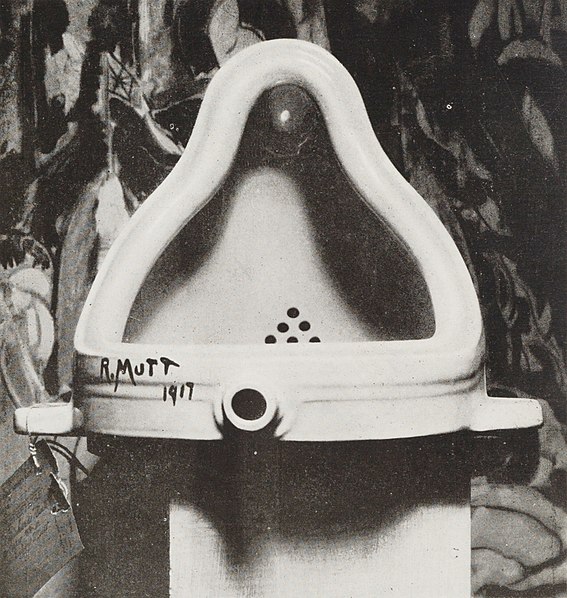
On Art As A Urinal

https://en.wikipedia.org/wiki/Fountain_%28Duchamp%29

"When you stand close to 'beauty and truth', you realize it's just a bunch of old carved stone that some drunk fucker or gypsy has pissed on." Todd Babiak / Come Barbarians, p. 75

Perhaps Duchamp's most famous piece is his (1917) Fountain. This is the first work of his I ever heard of. It was featured in an anarchist calendar someone gave me when I was in my teens (and therefore, of course, an anarchist). Duchamp bought an ordinary urinal from a plumbing supply store (J.L. Mott Iron Works on Fifth Avenue in New York, if you're a details guy), signed it 'R. Mutt' and submitted it an exhibition organized by the Society of Independent Artists, who had agreed to show every piece submitted. They did not exhibit R. Mutt's urinal. Duchamp and his collector friend Walter Arensburg both resigned from the
Society of Independent Artists in protest. 

As my narrator Isaac put it succinctly in my novel: "Chaos and modern art ensued."

Saturday, 5 October 2013

On The Importance of Framing Things

The frame in art is a fantastic innovation. Presumably before the frame there was just stuff. People before the frame took things (I speculate freely) just for what they were.

The frame is a magnifying glass, a punctuation mark, an augmentive. It is a technology for sharing attention, sharing ideas. It invites viewers to linger carefully on something very particular. Anything deliberately (or, indeed, randomly) framed becomes imbued with more meaning than it had before framing. A framed leaf is not like a leaf fallen on the ground. The frame invites the viewer to consider the leaf, the worlds of all leaves, the universe of things leaves might make us think of, to meditate on all this, to understand the leaf as something more than just organic trash on the ground.

Framing anything augments that thing and makes its better, by reminding us to augment that thing and make it better.


[Image by Spanish artist Lorenzo Durán ]