Wednesday, 11 December 2013

On the Most Dangerous, Least Useful Thing


In my day job as a research psychologist, I study how human beings process language. I use many methods, one of which is to model semantics using a  co-occurrence model of semantics. These computational models bootstrap word meaning by quantifying patterns of co-occurrence in a very large text corpus, using some fancy math that would be boring to explain here. The basic idea is this: the model can figure out that cats are more similar to dogs than they are to tractors because the word 'cat' occurs more often near the same words as the word 'dog' than near the same words as the word 'tractor'. Quantify that notion, and you have the model.

Recently I spent some time trying to construct a computational model of human judgments of a word's dangerousness and usefulness. My friend Lee Wurm has shown that people's behavior is measurably affected by a word's dangerousness and usefulness, suggesting that these dimensions are unconsciously assessed by people when they process words. He and I used my co-occurrence model to try to see if we could model these dimensions, with some success (the paper we wrote has been submitted for peer review).

One of the interesting side-effects of having a formal model of these dimensions is that we can compute quantitative estimates of dangerousness and usefulness for every word in the English language. Once we have done that, we can ask: What is the most dangerous, least useful thing there is?

The answer was kind of brilliant. According to our computer model, the quantifiably-proven most dangerous, least useful thing is [See if you can guess and then select the box to see.] anger!


[Image taken by me in about 1984 at the Acropolis in Greece.]

Tuesday, 10 December 2013

On Peeing on Duchamp's Art

In my earlier post on the varieties of the ReadyMade, I failed to mention an interesting example of a Reciprocal ReadyReMade, which I define as a replaced mass produced object designated as art that is then used a piece of non-art. In 1917 Duchamp selected a toilet and designated it as art, thus creating a ReadyMade. That original Fountain was lost so Duchamp later selected other toilets to stand in for the lost one, thus creating what I call ReadyReMades. Several people (Kendell Geers, Brian Eno,  Björn Kjelltoft, Pierre Pinoncelli, and Yuan Chai and Jian Jun Xi, according to Wikipedia) have had the idea of urinating into Duchamp's ReadyReMade urinals. (Pinoncelli also attacked one of them with a hammer.) Peeing on one of Duchamp's urinals is the equivalent of Duchamp's idea (never carried out) of using a Rembrandt as an ironing board. By peeing into his ReadyReMade, these people turn Duchamp's ReadyReMade back into a urinal, this creating a Reciprocal ReadyReMade, perhaps one of the few members of that obscure class of objects.

[Image: Daniel Spoerri's (1964) Utiliser un Rembrandt comme planche à repasser (Marcel Duchamp)]

Saturday, 7 December 2013

On the MadeUnReady

 
Duchamp is famous for inventing the concept of the ReadyMade: an ordinary industrial object (a coat hanger, a wine bottle rack, a shovel, a bicycle wheel, a urinal) that is re-conceptualized as art simply because the artist chooses to designate it so. In his notes to The Large Glass (another name for The Bride  Stripped Bare By Her Bachelors, Even), Duchamp also discussed the Reciprocal Readymade: "Use a Rembrandt as an ironing board". Many of Duchamp's original ReadyMades were lost, with the result that many that do still exist are 'reproductions' by the artist: stand-in ordinary objects, pressed into service to stand in for the original ordinary object. We might (though Duchamp did not) call them the ReadyReMades.

There are other possible classes that Duchamp didn't discuss.  One class I call the MadeUnready, defined as an object that previously functioned as art but has since been damaged so that it no longer does. The most famous example is perhaps Robert Rauschenburg's Erased De Kooning, subject of an earlier blog post. The Reciprocal MadeUnready is a previously-destroyed piece of art that has been fixed so that it functions as art again. The Large Glass itself is a perfect example, having been shattered in 1926 and then painstakingly put back together by Duchamp into its current state. If de Kooning had drawn another drawing on the paper that had been erased by Rauschenburg, that would be another example. Following the structure above, we can go on to define the ReMadeUnready, which would be a damaged piece of art that has been fixed to function as art and then damaged again so that it no longer functions as art. Although the category may seem strained, I think a lot of children's art falls exactly into this category. A child makes something that gets damaged and is then carefully restored by a parent. Ten years later no one cares about the childish piece anymore and it is discarded as a ReMadeUnready. 


[Image: Photograph by German photographer Martin Klimas, via Slipcast- The Ceramics Blog]

Wednesday, 4 December 2013

On Being Obsessed and Chocolate


I was amused and pleased to see my novel listed on http://www.fishpond.com.hk (Hong Kong) among 'Chocolate Obsession Books'. This is totally correct, as the book concerns two obsessive men who go on a road trip to buy a very expensive chocolate grinder, very much like the one pictured above (or this one).

[Image: Marcel Duchamp's Chocolate Grinder (No.1) at the Philadelphia Museum of Art.]

Sunday, 24 November 2013

On Not Being Able to See Your Favorite Piece of Art


I hardly know anything at all about one of my favourite works of art. I can hardly even remember it at all. I saw a painting somewhere important about thirty years ago. I remember that it was a large painting by an emerging contemporary artist. I remember that it used lava colors: bright reds, oranges, and yellows. I remember that it was painted in a surrealist style. I think it was about a male body, but somehow about birth, too. It was rich and luscious and thought-provoking. I have looked for that painting ever since, but I have never found a hint of it. Today I have no idea who painted it or where I saw it or even what it is actually about.

But the interesting thing is that I still think about that mere notion of a painting with such fondness and admiration! I still completely love it!


The image shows a picture of Andy Warhol's (1985) 'Invisible Scultpture', which actually consisted only of a label that said: “Andy Warhol, USA/Invisible Sculpture/Mixed Media 1985. Copyright (2013) by Chris F. Westbury; May not be reproduced without permission of the artist.

Sunday, 10 November 2013

On a Sense of Balance

I am a longtime fan of Canadian singer/songwriter  Jane Siberry. I saw her in concert a few days ago and she sang this song 'Calling All Angels' as an encore. It is my favorite song of hers.  

She has released all her songs on a 'pay as you think best' basis. I like this item among her items for sale: "Lump sum according to your sense of balance.  This is how I like to do things, personally."

Saturday, 9 November 2013

On Mobius Dick

A few years ago my favorite blog BoingBoing had a competition to 'mash up' two authors. There was a prize; I forget what. I submitted a mash-up between Thomas Pynchon and Herman Melville. It didn't place and so perhaps failed to achieve what it set out to do, but here is my entry for your amusement.

 [Image is from this article on the space whale meme. I love the Internet.]
---------------------------------------- 
Mobius Dick, by Thomas Pynchon & Herman Melville

Our imaginations set aflame by yelling, our shouted slogans, our inflated sense of team spirit, we all sensed the gigantic apparition at once. But though each of us saw the same thing with wide-open eyes, none of us knew if the thing was in the real world, or whether it had been ripped out of us and made to appear real by the strange times, the extenuating circumstances, the insanity of the moment materializing for us as bleeding heaving flesh, our pure goal. Anyway something every one of us, freaks and ex-cons and escapees, all of us lost devils, could believe in. Something we could bet our lives on.

When it came Captain A-Man climbed and climbed and climbed. He didn’t stop climbing but continued beyond the upper edges of our limping vessel’s ragged rigging, climbing, as we swarmed in awed confusion below, to an impossible perch. The A-man could gaze at the water and see all its mysterious beasts and he could see inside them, could enter into each one. He fell into the dark water to enter all the beings living in that vast heaving chaos. He was billions of vectors of thought accelerating out through earth’s oceans looking for life that inflected in a whisker’s breadth so that at once he was pushing himself, his multi-vectored self, like a reverse big bang, from all directions with fantastic speed into just one little speck, a tiny speck in the midst of vast oceans, one beating heart among the billions. Inside that great heart the brave man burst like a firework, sparkling out into every cell, and then into every cell’s chromosomes and every chromosome’s nucleotides and each nucleotide’s atoms, until at last, lost in salt watery wash beyond the reach of normal vision, there was no more climbing to look outward, there were no more vectors in flight. He had become what he had wanted to become, what we men had all fought and bled and died for him to become, had done at last what he had needed to do, what you and I need him to keep doing; conflicting desires, conflicting lives, conflicting needs and ambitions and dreams, resolved by the simple application of a meta operator. At last at long last, he was (at peace and whole! So marvelous!) the hunter and the hunted at once.

Monday, 4 November 2013

On the Cover of 'The Bride Stripped Bare By Her Bachelors, Even'

This is the cover to my novel, coming out in June from CounterPoint Press. My first blog post here explains the title. Along with the piece named in the title, the cover alludes to several of Marcel Duchamp's other pieces, including The Green Box (from which my chapter titles were drawn), the Boîte-en-valise, and Self-Portrait in Profile.

Saturday, 2 November 2013

On 36 Plots from the Futility Closet

The always-excellent Futility Closet has an interesting article today on French writer Georges Polti's (1916) claim that all stories are variations on just 36 basic plots (although Cecil Adams claims that Polti stole the idea from Italian playwright Carlo Gozzi). It's an interesting and thought-provoking list, but I find that many of the categories are vague enough to cover each other at different levels of abstraction.

My novel The Bride Stripped Bare By Her Bachelors, Even tells a story about a hero and his faithful sidekick who go on a heroic quest with a powerful third friend, to obtain an object that is necessary for the hero to obtain liberation. (More briefly: it's a buddy road trip story.) Depending on the level of abstraction at which you view the story, I think it could be described by any one (or some combination) of six of Polti's plots:
9. Daring enterprise. The Bold Leader takes the Object from the Adversary by overpowering the Adversary.
10. Abduction. The Abductor takes the Abducted from the Guardian.
11. The enigma. The Interrogator poses a Problem to the Seeker and gives a Seeker better ability to reach the Seeker’s goals.
26. Crimes of love. A Lover and the Beloved enter a conflict.
30. Ambition. The Ambitious Person seeks the Thing Coveted and is opposed by the Adversary.
35. Recovery of a lost one. The Seeker finds the One Found.
If I have to pick just one to describe my story, I choose number 11, The Enigma: The Interrogator poses a Problem to the Seeker and gives a Seeker better ability to reach the Seeker’s goals.

[Image: Altered detail from Caravaggio's Sacrifice of Isaac, now at the Uffizi Gallery in Florence]

Thursday, 31 October 2013

On the Defense of Blue Stuff

Reading about Yellowism made me think of Yves Klein's International Klein Blue (though International Klein Blue has more to do with blue than Yellowism has to do with yellow). This video homage to Yves Klein Blue by Jason Judd made me laugh. Nice work.

On the Defense of Yellow Stuff

Until I read this passionate defense of Yellowism by Calum Rodger, I did not know anything about the Yellowist movement.

[Image: Paul Cézanne's 'The Card Players', a version of the most valuable painting on earth today, valued at between US$250,000,000 and US$300,000,000.]

Sunday, 27 October 2013

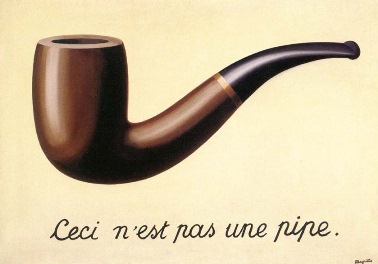
On the Treachery of Images

J.S.G. Boggs is a contemporary artist who has carved out an interesting niche for himself. He specializes in making drawings that look (very much) like real money, and exchanging them at face value in commercial transactions. For example, he has used a drawing of a US$1000 bill to buy a three dollar hamburger, receiving US$997 in real money (insofar as American money still is real, in these days of imminent US bankruptcy) as change. The extra-interesting twist is that Boggs' work is usually worth far more to his collectors than the face-value of its denomination. A Boggs bill with a $10 'face value' might sell for more than a thousand ('real') dollars on the open market. Although he has had a little trouble with counterfeiting charges, he has generally avoided them since he never pretends that his drawings are real money, only draws one side, and usually includes obvious changes from the real bill into his drawings. He has made his living from this art form for many decades. You can read more about Boggs here, at the on-line Duchampian journal, Tout-fait.

[Image: René Magritte's La trahison des images]

Sunday, 20 October 2013

On Remaking Duchamp's Readymade

I like this re-make of Duchamp's Fountain,  entitled Nouveau Rendez-vous (New Meeting) by contemporary French artist Jerome Pierre, who has a lot of Duchampian-inspired pieces on his website.

Friday, 18 October 2013

On The Rape of the Sabines


This painting, The Rape Of The Sabines, by Nicolas Poussin (1594–1665) has always seemed powerful to me. In part this is because I had a friend named Sabine when I first paid attention to it, and I knew no other meaning of the word than that it was a woman’s first name. I wondered if all the women allegedly being raped could possibly be named Sabine. Youth is difficult.


In fact (and now I speak with the full authority of Wikipedia) the Sabines were a tribe from whom the Romans abducted wives in 750 BCE, as attested to by, e.g. both Livy and Plutarch. The women in the painting weren’t actually being raped in the modern sense of the word, but in the old sense of the word, when rape (from the Latin root raptio meaning a large-scale abduction of women, as any careful reader of Wikipedia already knows) meant...well, yeah, a large-scale abduction of women. Like Wikipedia said.


Despite my confusion about the victims and my early visual confirmation of the lack of any partially naked women in the painting (and by no means implying either that rape and sex have anything more to do with each other than that a woman must be partially naked or that violent mass abduction is in itself just an enjoyable spectator sport), this is an exciting and great painting. You’ll know why if you go to the Louvre: this sucker is 1.6 metres by 2 metres (Americans: that’s really big for an oil painting).


Enjoy.

Tuesday, 15 October 2013

On A Dozen New Episodes of 'Breaking Bad'

[All these synopses were randomly-generated by my freeware text generation program, JanusNode. Sorry, there are no more actual episodes of the fabulous TV show, Breaking Bad.]
----- ----- -----
Lydia Rodarte-Quayle unexpectedly discovers that her old school buddy Jesus has just hired a new meth cook: Saul Goodman. At the same time, Hank Schrader has fallen in love with Badger. Sponsored by Ripley's 'Believe It Or Not'.
-----
Saul Goodman and Todd decide to blackmail Mike Ehrmantraut. Skinny Pete locks Mike Ehrmantraut into an organ donation container. Loosely based on the life of Bob Dylan.
-----
Steven Gomez and Marie Schrader meet in an airplane to discuss what to do about Gustavo Fring. Much to Walter White's surprise, Lydia Rodarte-Quayle hits Badger with a weapon carefully built using a piece of enamel screwed onto a piece of pine. Viewer discretion advised.
-----
Lydia Rodarte-Quayle unexpectedly discovers that her lover Ronnie has been accused of murdering Lydia Rodarte-Quayle. Meanwhile, some shady characters with federal government connections are asking questions about Lydia Rodarte-Quayle's income. Thanks to this masterful cast, the plot plays out better than it sounds.
-----
Walter White is surprised to learn that his old school buddy Otto is having sex with Skyler White. Meanwhile, Jesse Pinkman decides that it is necessary to kill Hank Schrader. Episode title: Exploding Heroine.
-----
Walter White, Junior and Walter White decide to start selling rosemary together. Much to Walter White's surprise, Lydia Rodarte-Quayle hits Steven Gomez with a weapon that Gretchen Schwartz has constructed using woven hair. Episode title: Culminating Synchronizing Pawn.
-----
Skyler White unexpectedly discovers that her colleague Cody has accidentally injured Marie Schrader. Meanwhile, Skyler White threatens Walter White's bottom. Gratuitous nudity adds little to this lacklustre work.
-----
Marie Schrader unexpectedly discovers that her lover Freddy is suing Skyler White. Meanwhile, Saul Goodman locks Mike Ehrmantraut into a canoe. Chaos ensues.
-----
In this surprising episode, Gretchen Schwartz and Marie Schrader decide to start selling crystal meth together. Much to Mike Ehrmantraut's surprise, Badger is planning to kill Todd. Episode title: Fen-sucked Swooning Dandelions.
-----
Marie Schrader unexpectedly discovers that her father-in-law Doyle has recently had drunken sex with Skyler White. At the same time, Badger starts studying genderization. Loosely based on the works of Oprah Winfrey.
-----
Gustavo Fring is surprised to learn that his mate Ernest already knows Skyler White. Much to Gustavo Fring's surprise, Gustavo Fring reluctantly decides that it is necessary to kill Gustavo Fring. Episode title: Stealing Dill.
-----
Skyler White is surprised to learn that her sweet lover Josh has a new meth cook: his eager neighbour, Sheree. Skyler White starts studying atheism. Great art direction.